हिन्दी

About ISRO Propulsion Complex (IPRC)
Overview
The ISRO Propulsion Complex (IPRC), situated on the lower slopes of the Mahendragiri hills in Tamil Nadu, is a premier centre of excellence dedicated to the assembly, integration, and testing of liquid propulsion systems for India’s launch vehicles and spacecraft. Spanning an expansive area of nearly 6,400 acres, IPRC provides a world-class platform for validating the entire spectrum of liquid rocket technology, contributing significantly to the success of every major ISRO mission.
Core Mandate
IPRC is entrusted with the executive mandate to realize propulsion power plants with thrust capacities ranging from 2 kN to 2000 kN.
- System Realization: The assembly and delivery of Earth-storable, cryogenic, and semi-cryogenic engines and stages for operational launch vehicles including PSLV, GSLV, and LVM3.
- Rigorous Validation: Conducting developmental, qualification, and flight acceptance testing of engines and stages under both sea-level and High Altitude (HAT) simulated space environments.
- Propellant Management: Serving as a critical hub for the production and supply of cryogenic propellants (Liquid Hydrogen, Liquid Oxygen and Liquid Nitrogen) and storable liquid propellants for national launch and satellite programmes.
Historical Evolution
Established in 1982 as LPSC Mahendragiri to support the burgeoning needs of the Indian space programme, the centre has evolved from a testing facility into a multidisciplinary complex.
In recognition of its expanding role and the strategic importance of liquid and cryogenic propulsion, the centre was elevated to its current status as ISRO Propulsion Complex (IPRC) on 1 February 2014.
Since its inception, IPRC has reached significant milestones, from the first successful hot test in 1985 to propelling the Chandrayaan-3 mission and qualifying engines for the prestigious Gaganyaan human spaceflight programme.
Innovation and Strategic Vision
IPRC is driven by a commitment to the "zero-defect" demand of the Indian space programme, ensuring the highest standards of safety, quality, and reliability.
Beyond operational support, the complex actively pursues Strategic Research & Development (R&D) and Technology Development Programmes (TDP) to pioneer future-ready solutions.
Current strategic focuses include:
- Next-Generation Propulsion: Development of the high-thrust 2000 kN Semi-cryogenic engine and the exploration of eco-friendly green propellants.
- Global Leadership: Fostering collaborations with private entities and research organisations to advance space technology and strengthen India’s position as a global leader in the space arena.
IPRC Activities
The ISRO Propulsion Complex (IPRC) serves as the multidisciplinary hub for the propulsion lifecycle of the Indian space programme. Its activities encompass a wide spectrum of rocket technology, ranging from the intricate assembly of sub-systems to the rigorous validation of massive launch vehicle stages under simulated space conditions.
I. Propulsion System Realisation: Assembly and Integration
IPRC is mandated with the assembly, integration, and delivery of propulsion power plants for liquid stages, covering a vast thrust spectrum from 2 kN to 2000 kN.
II. Comprehensive Testing and Validation
As the primary testing hub for ISRO, IPRC conducts developmental, qualification, and flight acceptance testing for various propulsion systems.
III. Strategic Propellant Management and Production
IPRC plays a pivotal role in the Indian cryogenic rocket programme by managing the entire supply chain of high-energy propellants.
IV. Strategic R&D and Technology Development
To maintain India's competitive edge, IPRC aggressively pursues Technology Development Programmes (TDP) and strategic research.
V. Advanced Engineering Support and Reliability
Every activity at IPRC is underpinned by a commitment to the "zero-defect" mandate.
I. Propulsion System Realisation: Assembly and Integration
IPRC is mandated with the assembly, integration, and delivery of propulsion power plants for liquid stages, covering a vast thrust spectrum from 2 kN to 2000 kN.
- Engine Assembly (EAIE): This entity meticulously assembles intricate sub-systems including turbo pumps for Earth-storable, cryogenic and semi-cryogenic engines. It manages specialized facilities for throat bonding, protective coating, and rotor balancing to ensure the integrity of engines like the Vikas and CE20.
- Stage Integration (SAIE): IPRC is responsible for the realization of flight-worthy stages for the PSLV, GSLV and LVM3 launch vehicles. This includes the vertical and horizontal integration of stages such as the PS2, GS2, L110 and C25, alongside developmental stages like the SC120.
- Precision Fabrication: The complex operates advanced fabrication facilities, including robotic plasma coating and orbital TIG welding to ensure the high-precision realization of cryogenic and semi-cryogenic hardware.
II. Comprehensive Testing and Validation
As the primary testing hub for ISRO, IPRC conducts developmental, qualification, and flight acceptance testing for various propulsion systems.
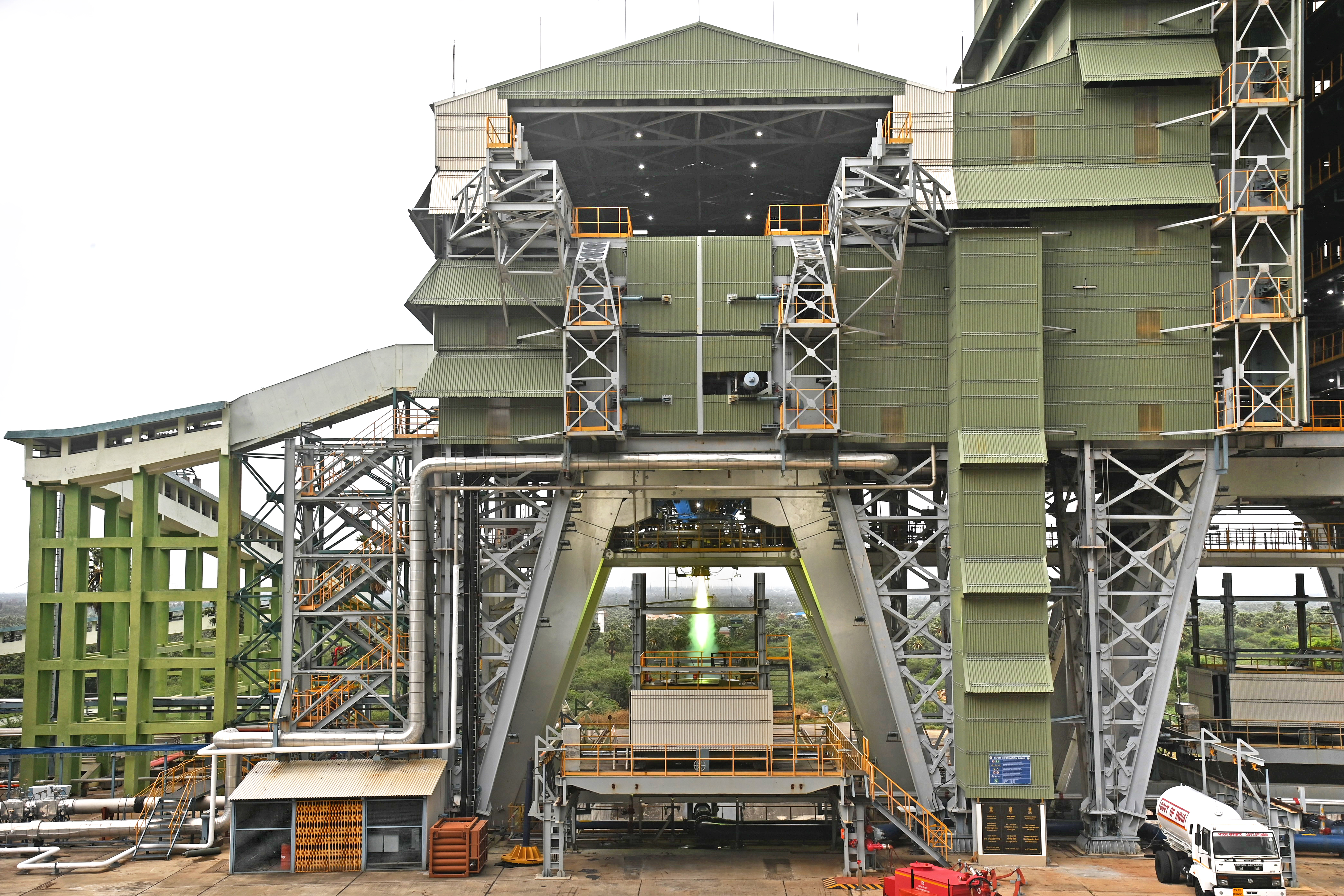
- Static Fire Testing: The complex manages world-class test stands, such as the Principal Test Stand (PTS) capable of testing engines and stages up to 135 tonnes including the human-rated Vikas engines for the Gaganyaan mission.
- High Altitude Testing (HAT): IPRC operates specialized facilities to simulate the vacuum of space, essential for qualifying upper-stage engines like the PS4 and spacecraft thrusters like the Liquid Apogee Motor (LAM).
- Semi-Cryogenic Validation: The newly commissioned Semi-Cryo Integrated Engine Test Facility (SIET) enables the testing of high-thrust 2000 kN engines using Isrosene and Liquid Oxygen, a critical milestone for future heavy-lift capabilities.
III. Strategic Propellant Management and Production
IPRC plays a pivotal role in the Indian cryogenic rocket programme by managing the entire supply chain of high-energy propellants.
- Cryogenic Production: The complex operates the Liquid Hydrogen Production Plant ensuring a sustainable supply of hundreds of tonnes of Liquid Hydrogen (LH2), Liquid Oxygen (LOX), and Liquid Nitrogen (LIN).
- Storage and Servicing: It is responsible for the analysis, storage, and uninterrupted supply of both cryogenic and Earth-storable liquid propellants for national launch vehicle and satellite programmes.
IV. Strategic R&D and Technology Development
To maintain India's competitive edge, IPRC aggressively pursues Technology Development Programmes (TDP) and strategic research.
- Future Propulsion: Development of LOX-Methane systems and green propellants to create eco-friendly, sustainable rocket engines for the next generation of space exploration.
- Indigenous Automation: The complex has pioneered the development of indigenous Hot-Standby PLCs with a very low cycle time to replace imported systems, enhancing the safety and reliability of automated test sequences.
- Interplanetary Simulation: IPRC provides a specialized platform for simulation trials intended for interplanetary missions including crucial ground tests for the Mars Orbiter Mission (MOM) and Chandrayaan modules.
V. Advanced Engineering Support and Reliability
Every activity at IPRC is underpinned by a commitment to the "zero-defect" mandate.
- Quality Assurance (SRSE): The complex utilizes advanced Non-Destructive Testing (NDT) including high-energy X-ray imaging of internal engine structures.
- Metrology and Material Testing: Specialized labs provide precision dimensional inspections and cryogenic material testing ensuring that every component can withstand the extreme thermal and structural loads of spaceflight.
IPRC Facilities
IPRC operates a vast, world-class infrastructure spanning nearly 6,400 acres at Mahendragiri, specifically designed for the assembly, integration, and rigorous validation of India’s liquid propulsion systems. These facilities are engineered to the highest international standards, ensuring that every component—from small thrusters to massive 2000 kN engines.
I. Assembly and Integration Facilities
IPRC houses specialized environments for the meticulous realization of rocket engines and launch vehicle stages.
II. Propulsion Test Stands and Static Fire Facilities
IPRC serves as ISRO’s primary testing hub, featuring a suite of vertical and horizontal test stands capable of simulating both sea-level and vacuum conditions.
III. Specialized Engineering and Support Infrastructure
IPRC’s mission success is underpinned by advanced laboratories and production plants.
I. Assembly and Integration Facilities
IPRC houses specialized environments for the meticulous realization of rocket engines and launch vehicle stages.
- Engine Assembly & Integration: These facilities feature Class 100,000 clean rooms with specialized tools and EOT cranes to ensure contaminant-free environments for mission-critical hardware dedicated to the assembly of intricate sub-systems including turbopumps and thrust chambers for Earth-Storable, Cryogenic and Semi-Cryogenic engines.
- Specialised Sub-system Infrastructure: Facilities include Dynamic Balancing for rotors, Throat Fixing and Bonding, controlled environments for curing refractory cement in engine throats, Plasma Coating for thermal barrier application on thrust chambers, and Water Flow Test facilities for the hydraulic characterisation of injectors and control valves.
- Stage Assembly & Integration: These facilities manage the vertical and horizontal integration of flight-worthy stages including Earth-Storable, Cryogenic and Semi-Cryogenic stages. Infrastructure includes Horizontal Integration Fixtures for precise alignment and integration of stages and Insulation Processing Facilities for applying composite thermal insulation layers to cryogenic propellant tanks.
II. Propulsion Test Stands and Static Fire Facilities
IPRC serves as ISRO’s primary testing hub, featuring a suite of vertical and horizontal test stands capable of simulating both sea-level and vacuum conditions.
- Principal Test Stand (PTS): A robust facility capable of testing Earth-Storable engines and stages up to 135 tonnes including nominal and off-nominal qualification tests for the Gaganyaan mission.
- Cryogenic Test Facilities (CTE): A cluster of sophisticated test stands supporting the CUS and CE20 projects.
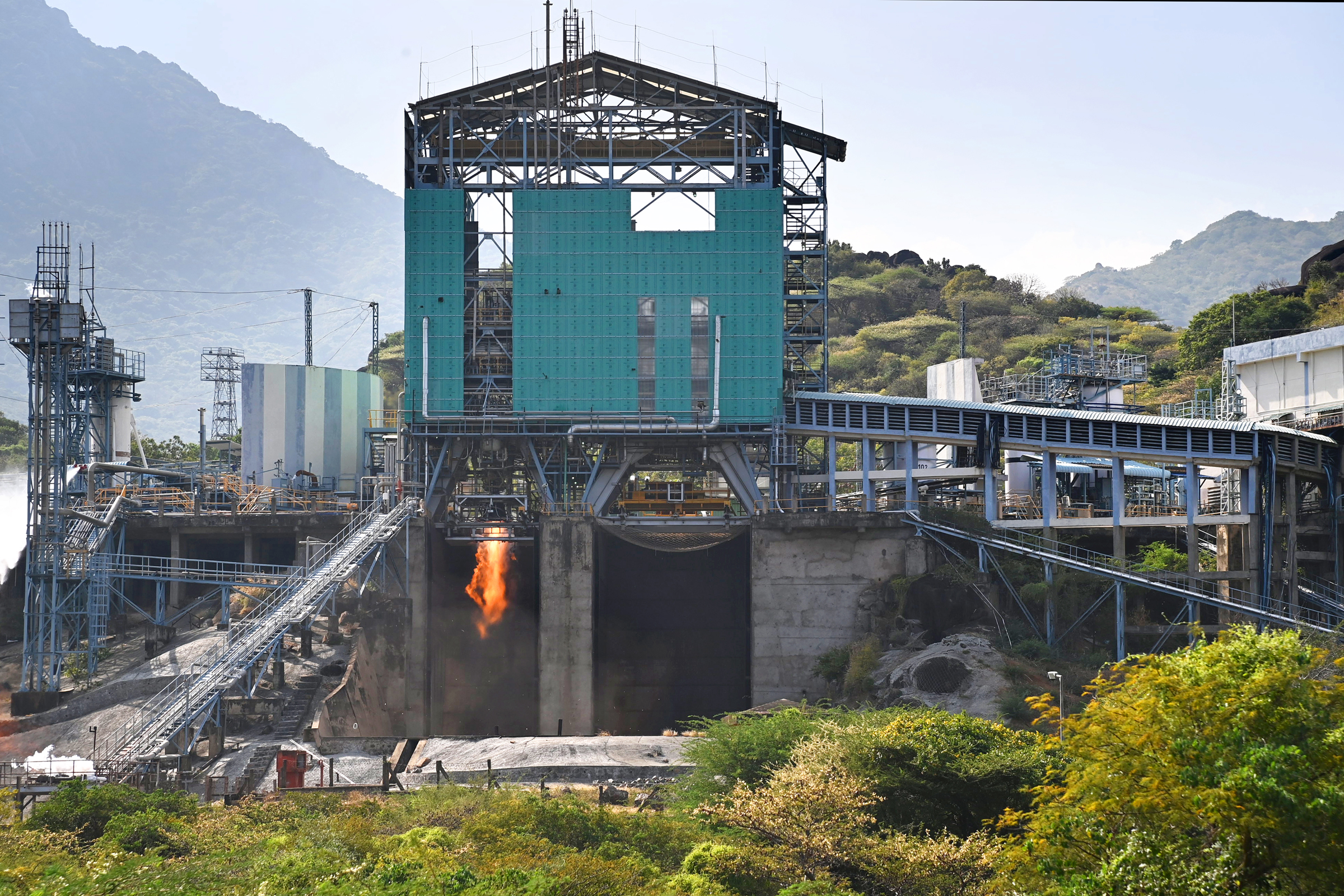
- Main Engine & Stage Test (MET): A vertical facility for hot tests of cryogenic engines up to 216 kN and integrated stages.
- Thrust Chamber Test (TCT): Primarily used for pressure-fed developmental tests and high-altitude flight acceptance of CE20 engines.
- Subscale Engine Test (SET): The pioneering cryogenic facility at IPRC used for testing steering engines and turbopump sub-systems.
- Redundant and Upcoming Infrastructure: To increase throughput, IPRC has commissioned the Cryogenic Turbo-Pump Test (CTPT) facility and is realizing the Integrated Cryo Engine & Stage Test (ICET) facility, a massive 42-metre-tall structure.
- Semi-Cryogenic Integrated Engine & Stage Test (SIET): A state-of-the-art facility featuring twin test bays for the development of high-thrust 2000 kN semi-cryogenic engines using Isrosene and Liquid Oxygen.
- High Altitude Test (HAT) Facilities: Specialized vacuum environments including LUS-TF, STTF, and NLTF used to qualify upper-stage engines like the PS4 and spacecraft thrusters such as the Liquid Apogee Motor (LAM).
III. Specialized Engineering and Support Infrastructure
IPRC’s mission success is underpinned by advanced laboratories and production plants.
- Propellant Production and Management: The complex operates a Liquid Hydrogen Production Plant with a capacity of hundreds of tonnes, ensuring a sustainable supply of Liquid Hydrogen (LH2), Liquid Oxygen (LOX), and Liquid Nitrogen (LIN) for the national space programme.
- Non-Destructive Testing (NDT): A 6 MeV Linear Accelerator (LINAC) facility enables high-energy X-ray imaging for the internal inspection of flight engines as a single unit.
- Metrology and Material Testing: These laboratories provide dimensional inspections with accuracies up to 15 nanometers and perform mechanical property evaluations in extreme environments, including low-temperature testing down to 20K.
- Structural Test Facility (STF): Dedicated to testing the structural integrity of pressurized hardware such as propellant tanks, with a capacity to handle hardware up to 5 metres in diameter.
- Centralized De-mineralized Water Plant (CDMP): A facility producing high-purity water with a Zero-Liquid Discharge feature to comply with environmental norms.
IPRC Achievements
The ISRO Propulsion Complex (IPRC) has been the cornerstone of India's space achievements...
I. Historical Milestones: A Legacy of Propulsion Excellence
The journey of the ISRO Propulsion Complex (IPRC) is a testament to India's pursuit of self-reliance in liquid, cryogenic and semi-cryogenic rocket technology.
II. Strategic Contributions to National Missions
III. Technological Breakthroughs and Innovation
IV. Strategic Infrastructure and Indigenisation
V. Operational Excellence and Quality
I. Historical Milestones: A Legacy of Propulsion Excellence
The journey of the ISRO Propulsion Complex (IPRC) is a testament to India's pursuit of self-reliance in liquid, cryogenic and semi-cryogenic rocket technology.
- 1982: Establishment of the centre at Mahendragiri to support the growing needs of the Indian space programme.
- 1984: Realization of the Multidisciplinary Test Facility with remote control and monitoring instrumentation.
- December 28, 1985: First successful hot test firing in the history of Mahendragiri conducted with the Gas Generator.
- March 26, 1987: First single-element injector test using Gaseous Hydrogen and Liquid Oxygen at the SET facility.
- May 6, 1987: First successful Turbo-Pump test of the Vikas Engine.
- October 31, 1987: First VIKAS engine ignition test for 20 seconds at the Principal Test Stand (PTS).
- 1992: First firing of the Liquid Apogee Motor (LAM) engine at the High Altitude Test (HAT) facility.
- June 27, 1993: First cryogenic thrust chamber test at the SET facility.
- 1994: Inception of the Main Engine & Stage Test (MET) facility.
- February 16, 2000: First indigenous cryogenic engine (A0) integrated and tested at MET.
- February 1, 2014: Official elevation and renaming as ISRO Propulsion Complex (IPRC).
- May 10, 2023: First Power Head Test Article (PHTA) test at the SIET facility.
- February 27, 2024: SIET facility dedicated to the nation by the Honourable Prime Minister.
- 2025: Successful execution of the PHTA-R series and commissioning of the CTPT facility.
- July 2025: Commissioning of the New LAM Test Facility (NLTF).
- June 2026 (Planned): Expected commissioning of the Integrated Cryo Engine & Stage Test (ICET) facility.
II. Strategic Contributions to National Missions
- Chandrayaan-3: Successfully performed critical propulsion system testing on the lunar module.
- Gaganyaan Programme: Qualification of L110 liquid engines and CE20 cryogenic engines for India's first human spaceflight mission.
- Mars Orbiter Mission (MOM): Conducted crucial simulation trials and demonstrated restart capability of the LAM engine.
III. Technological Breakthroughs and Innovation
- Bootstrap Mode Milestone: Demonstrated bootstrap mode start of the CE20 engine.
- Additive Manufacturing (3D Printing): Successfully tested the first additive manufactured engine for 665 seconds.
- Advanced Nozzle Technology: Completed successful long-duration testing of PS4 engines using advanced nozzle materials.
- Nozzle Protection System (NPS): Developed and qualified an indigenous system enabling sea-level testing of cryogenic engines.
IV. Strategic Infrastructure and Indigenisation
- Indigenous Automation: Developed a high-speed Hot/Standby PLC in collaboration with ECIL.
- Semi-Cryogenic Leadership: SIET represents the pinnacle of high-thrust 2000 kN engine testing capability.
- Sustainable Infrastructure: Establishment of CDMP with Zero-Liquid Discharge technology.
V. Operational Excellence and Quality
- Human Safety: Faster abort reaction times have repeatedly safeguarded valuable engine hardware.
- Transducer Leadership: Annual calibration and supply of nearly 2,000 high-precision transducers for PSLV, GSLV and LVM3 programmes.